The Ultimate Guide to Hiring a Siding Installation Contractor
Exploring the world of siding installation contractors, this comprehensive guide dives into the importance of their role in home improvement projects. From discussing the various types of siding materials to detailing the installation process, this introduction sets the stage for a deep dive into the world of siding installation contractors.
Importance of Siding Installation Contractors
When it comes to home improvement projects, siding installation contractors play a crucial role in ensuring the exterior of your home is both functional and aesthetically pleasing. These professionals have the expertise and experience to handle the installation of various types of siding materials, such as vinyl, wood, fiber cement, and metal.
Quality of the Siding Installation
Hiring a professional siding installation contractor can greatly impact the quality of the installation. These contractors have the necessary skills and knowledge to properly install siding, ensuring that it is done correctly the first time. This can help prevent issues such as water damage, mold growth, and energy inefficiency in the long run.
Benefits of Experienced Contractors
- Expertise: Experienced siding installation contractors have the expertise to assess your home's specific needs and recommend the best siding materials and installation techniques.
- Efficiency: Professionals can complete the installation in a timely manner, saving you time and hassle.
- Quality Workmanship: With years of experience, contractors can deliver high-quality work that enhances the curb appeal and value of your home.
- Warranty: Many professional contractors offer warranties on their work, providing you with peace of mind and protection in case any issues arise after the installation.
Types of Siding Materials
When it comes to siding materials for residential construction, there are several common options available. Each type of siding material has its own set of characteristics, pros, and cons that should be considered before making a decision.
Vinyl Siding
- One of the most popular siding materials due to its affordability and low maintenance requirements.
- Durable and resistant to rot, mold, and pests.
- Available in a wide range of colors and styles.
- May fade over time and can be prone to cracking in extreme weather conditions.
- Cost-effective option for homeowners on a budget.
Wood Siding
- Offers a natural and traditional look to a home.
- Can be painted or stained in various colors.
- Requires regular maintenance, such as painting, staining, and sealing to prevent rot and insect damage.
- Prone to warping, splitting, and cracking over time.
- Higher initial cost compared to vinyl siding.
Fiber Cement Siding
- Resistant to fire, insects, and rot.
- Durable and low maintenance, requiring occasional painting or caulking.
- Available in a variety of textures that mimic wood or stucco.
- Heavier and more difficult to install than other siding materials.
- Higher initial cost but offers long-term durability.
Metal Siding
- Highly durable and resistant to fire, insects, and rot.
- Available in aluminum, steel, or copper options.
- Low maintenance and long-lasting with proper installation.
- May dent or scratch easily, especially in high-impact areas.
- Can be more expensive upfront compared to vinyl or wood siding.
Siding Installation Process
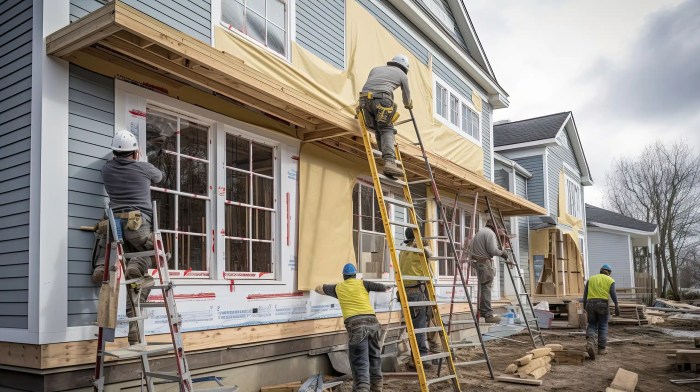
Installing siding involves a series of steps to ensure a proper and durable finish. Siding contractors follow a systematic process to prepare the property, cut and fit the siding materials, and secure them in place.
Property Preparation
Before starting the installation, siding contractors assess the property to determine the best approach. They clean the exterior walls, remove any existing siding or damaged materials, and inspect for any structural issues that need to be addressed. Additionally, contractors may need to apply a moisture barrier or insulation to improve energy efficiency.
Cutting and Fitting Siding
Once the property is prepared, siding contractors measure and cut the siding materials to fit the specific dimensions of the walls. They use specialized tools such as saws and shears to ensure precise cuts and a seamless fit. Properly fitting the siding is crucial to prevent gaps or overlaps that could compromise the integrity of the installation.
Securing Siding Materials
After cutting and fitting the siding, contractors secure the materials to the walls using nails, screws, or clips. They carefully align each piece to create a uniform appearance and ensure proper alignment. Properly securing the siding materials is essential to protect the property from the elements and maintain the structural integrity of the installation.
Quality Assurance and Maintenance
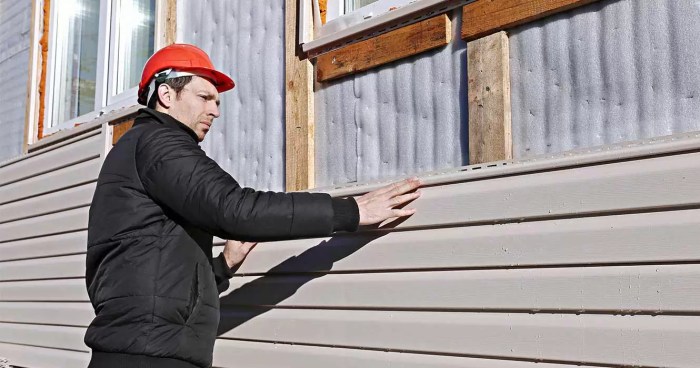
When it comes to siding installation, ensuring quality assurance is crucial for the longevity and durability of the siding. Quality assurance not only guarantees a job well done but also helps prevent potential issues that may arise post-installation. Let's dive into the importance of quality assurance and maintenance in siding installation.
Common Post-Installation Issues and Solutions
- Moisture Damage: One common issue that may arise post-installation is moisture damage, which can lead to mold and rot. Contractors address this by ensuring proper sealing and insulation during installation.
- Cracks and Gaps: Siding can develop cracks and gaps over time due to weather exposure. Contractors recommend regular inspections to catch any signs of damage early on and repair them promptly.
- Fading or Discoloration: Exposure to UV rays and harsh weather conditions can cause siding to fade or discolor. Homeowners can opt for regular cleaning and maintenance to preserve the color and appearance of their siding.
Tips for Homeowners on Siding Maintenance
- Regular Cleaning: Keep your siding clean by washing it with a mild detergent and water to remove dirt, grime, and mold.
- Inspect for Damage: Periodically inspect your siding for any signs of damage, such as cracks, gaps, or loose panels, and address them promptly.
- Trim Vegetation: Trim back any vegetation near your siding to prevent moisture buildup and reduce the risk of damage.
- Professional Inspection: Consider hiring a professional siding contractor for annual inspections to catch any issues early on and ensure the longevity of your siding.
Concluding Remarks
In conclusion, siding installation contractors play a crucial role in ensuring the quality and durability of your home's siding. By understanding their importance, materials they work with, and the installation process, homeowners can make informed decisions when it comes to their siding needs.
Question & Answer Hub
What are the benefits of hiring a professional siding installation contractor?
Professional contractors can ensure high-quality work, offer expertise in siding materials, and provide efficient installation services.
What are the common issues that may arise post-siding installation?
Issues like warping, cracking, or color fading may occur, but experienced contractors can address them effectively.
How can homeowners maintain the condition of their siding?
Regular cleaning, inspections for damage, and timely repairs can help homeowners preserve the integrity of their siding.